Commercial renovation
What commercial renovation costs in Cyprus in 2026
Indicative commercial renovation levels for Limassol and the other districts, what moves a quote inside them, and what a contractor has usually left out.
9 min read
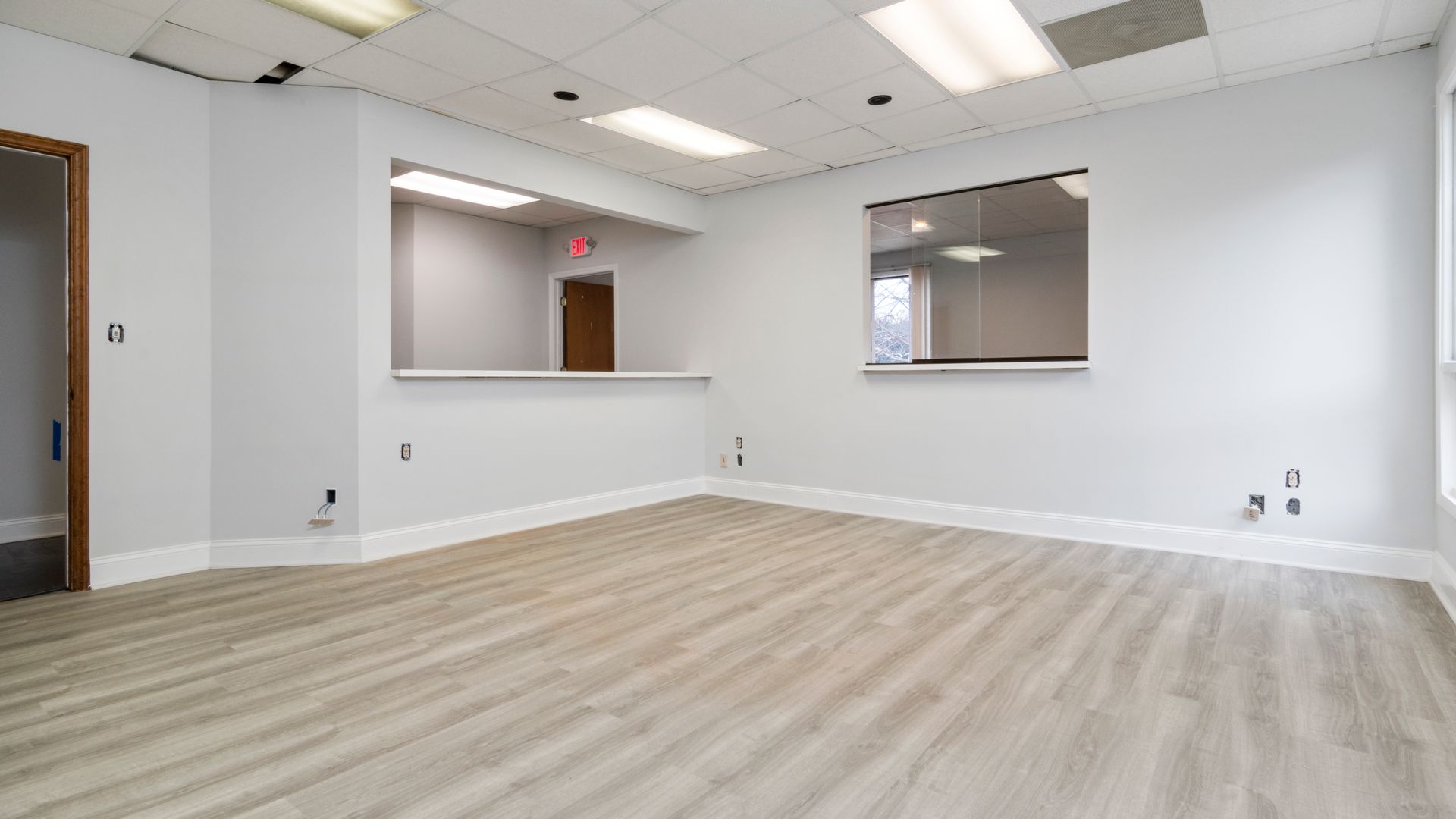
Marina covers hotel, office, retail and restaurant refurbishment, where the binding constraint is rarely build time. In Cyprus it is occupancy: rooms are full from April to October, so the programme decides the cost more than the rate does.
Published
The short answer
Commercial interior renovation in Cyprus is published at €420 to €1,150 per square metre nationally, with a median of €680, for work taken from stripped shell to occupied space. In Limassol the same scope is published at €470 to €1,288 with a median of €762 — the highest of the five districts. That spread of nearly three to one between the bottom and the top of the national range is not contractor margin. It is the difference between recarpeting and repainting a floor of offices and rebuilding the services behind the ceiling.
The figures above are read from the price index at page load rather than typed into this article, so they carry their own basis and date.
What drives the range
Four variables move a commercial quote more than anything else, and none of them is the finish specification that occupies most of the first meeting.
Services, and whether they are being renewed. A refurbishment that keeps the existing distribution boards, ductwork and drainage sits near the bottom of the range. One that renews them sits near the top, because the mechanical and electrical package on a commercial interior routinely accounts for a larger share of the total than the builder's work does. The question to settle before pricing is not what the ceiling will look like but what is being replaced above it.
Whether the building trades through the works. A unit handed over empty is one mobilisation, continuous trade sequencing, unrestricted hours and no separation of the public from the site. A unit that keeps trading adds out-of-hours working, temporary protection, a separated materials route, daily make-safe and a supervisor whose job is partly to manage the interface. That premium is real and it is rarely shown as a line item, which is why two quotes for what looks like the same job can sit a long way apart.
The condition of what is being taken over. Commercial stock in Cyprus divides roughly into shells handed over as category A with services capped off, and occupied space handed back at the end of a lease in whatever condition the previous tenant left it. The second carries strip-out, waste disposal, make-good of the landlord's finishes and the discovery risk that goes with opening up. The 1970s to 1990s blocks that dominate parts of Strovolos and inner Nicosia bring a particular version of this: the wiring and pipework generally reach the end of their life at the same moment, and a renovation that renews one without the other is deferring rather than avoiding the cost.
Sector. Commercial renovation is a single line in a price table and several different jobs in practice. Category B office fit-out including services is published at €350 to €950 per square metre with a median of €560. Retail runs at €450 to €1,300 with a median of €720, because the shopfront, the lighting and the fixtures carry the cost. Restaurant fit-out is the outlier at €700 to €2,100 with a median of €1,150, and the reason is almost entirely extraction, grease management and the approvals attached to them. An owner comparing a restaurant quote against a general commercial rate is comparing against the wrong number.
Cost by district
Location moves the recorded medians by a meaningful amount, and the pattern is consistent across scopes rather than specific to this one.
Limassol is the highest at a median of €762 per square metre. Paphos follows at €721, Nicosia sits on the national baseline of €680, Larnaca is published at €653 and the Famagusta district — Paralimni, Ayia Napa, Protaras and the villages behind them — at €626.
The gap is demand rather than distance. Limassol has absorbed the largest share of commercial development on the island, and the same contractors who could price a shop fit-out are already committed to tower work. The high-rise development along the seafront has also created a standing volume of balcony waterproofing and facade maintenance that keeps the specialist trades occupied year-round, so a commercial client is bidding for the same crews. In Germasogeia and the tourist strip behind it, dense grid connections mean an electrical upgrade often needs a load assessment before capacity can be confirmed, which is a programme item rather than a cost item until it comes back negative.
The Famagusta district is cheapest on paper and hardest to schedule. Its stock is overwhelmingly seasonal, so refurbishment concentrates into November to March and the whole market buys the same four months. A programme agreed in September for that winter competes for whoever is uncommitted, and rate reflects it.
District ranges are on the coverage pages, and the Limassol commercial renovation page carries the local figures alongside the contractors recorded as working there.
What is usually excluded
Most disputes on Cypriot commercial refurbishment are not about the rate. They are about what the rate was understood to include. The items below sit outside a typical square-metre quote unless they are written in.
- Professional fees. Drawings that will be submitted for permission must be certified by an ETEK-registered engineer or architect, and that appointment is the owner's, not the contractor's.
- Statutory approvals. Planning permission is assessed against the local plan, zoning and density limits and is decided first; the building permit follows it. Interior work inside an unchanged envelope generally engages neither. Changing the envelope, the layout in a way that affects structure, or the use class engages both, and those durations belong in the programme from the first version.
- Landlord approvals and dilapidations. A licence for alterations from the landlord, and the reinstatement obligation at the end of the term, are the tenant's cost and are routinely discovered late.
- Loose furniture and equipment. Desks, seating, kitchen equipment and IT are a separate budget with separate lead times, and combining them with building work produces a total that cannot be compared against a competing quote.
- Out-of-hours premiums where the building trades through the works.
- Asbestos survey and licensed removal on stock of a certain age, which is a provisional item until the survey is back.
- VAT. Commercial refurbishment does not attract the reduced rate that applies to certain private residential renovation. The rate should be stated on the quote rather than assumed, and the Tax Department is the authority on which rate applies to a given property and use.
How to compare quotes
The same written scope goes to every contractor invited to price. Three quotes built on three different assumptions are three different jobs, and comparing their totals is arithmetic without meaning.
Fix the scope before the rate
A drawing set and a specification, however brief, produced before pricing starts. Contractors asked to price from a walk-round will each price a different building, and the cheapest will be the one who assumed the least.
Require preliminaries itemised
Site set-up, temporary power and water, waste removal, protection of retained finishes, supervision and insurance. When these are absent from a quote they have not been removed from the job, only from the paperwork.
Separate builder's work from services
Mechanical and electrical should price as its own package with its own subcontractor named. On commercial work this is where the money is and where the variation risk sits.
Flag provisional sums with the specification each assumes
Floor finishes, sanitaryware, ironmongery, lighting. An allowance set low is the most polite way to make a quote look competitive.
Tie payment to verifiable stages
Strip-out complete, first fix, services commissioned, practical completion. Never to calendar dates, and never a large sum before mobilisation with no stage attached to it.
Check the registration class against the contract value
Contracting is registered by category and by class, and the class limits the value of works that may lawfully be undertaken. A fit-out that sits above a contractor's class is a problem that surfaces at the worst possible moment.
Ask for two comparable addresses in the same district
Addresses rather than photographs, with the date promised and the date achieved.
Common questions
Why is Limassol more expensive than the rest of the island?
Demand concentration rather than distance. The contractors capable of delivering a commercial programme in Limassol are largely absorbed by high-rise and hospitality work, so a new tender competes with more committed capacity than it would inland. We publish no per-district figure for that gap: no published source breaks Cypriot commercial fit-out costs down by district, and a number we constructed ourselves would be worth less than the reasoning. A client in Limassol is not paying a premium for a harder job; they are paying for capacity that has an alternative buyer.
Can a commercial renovation run while the premises trade?
Frequently yes, and it costs more than owners expect. Out-of-hours working, temporary protection, a separated materials route and daily make-safe are all additional, and the programme lengthens. The comparison worth running is the premium against the trading margin actually earned during the works, not against the notional turnover.
What does the square-metre rate cover?
The building work and, depending on how the quote is structured, the services. It does not normally cover professional fees, statutory approvals, landlord consents, loose furniture and equipment, or VAT. A rate quoted without those stated is not comparable against one that includes them.
Does interior renovation need a permit?
Work inside an unchanged envelope that does not affect structure generally does not. Changing the envelope, altering structure, or changing the use class engages planning permission and then a building permit, with certified drawings from an ETEK-registered professional. Those approvals typically run to around 150 and 120 days respectively, and the application is made in the owner's name.
How far ahead should a winter programme be committed?
Earlier than most boards expect if the property is in the Famagusta district or on the coastal Paphos strip, where seasonal stock compresses almost all refurbishment into November to March. In Nicosia the commercial stock trades year-round, so the constraint is contractor capacity rather than season.
Is the cheapest quote ever the right one?
It is when the scope is genuinely identical and the difference is overhead. It usually is not: a quote materially below the others has the gap somewhere, most often in preliminaries, insurance, or a provisional sum set at a figure nobody could build to. The useful response is to ask the low bidder to price the same exclusions list as everyone else.
Commercial renovation contractors recorded in Limassol
4 companies shown here.
AN.O. Constructions Ltd.
Mesa Geitonia, Limassol
AN.O. Constructions Ltd. is a construction company in Mesa Geitonia, in the Limassol district.
- General building
- Home renovation
- Commercial renovation
- House extension
- +2 more
Build Better Future
Germasogeia, Limassol
Build Better Future is a construction company in Germasogeia, in the Limassol district.
- General building
- Home renovation
- Commercial renovation
- House extension
- +2 more
Urban Noise Control
Limassol Centre, Limassol
Urban Noise Control is a construction company in Limassol Centre, in the Limassol district.
- General building
- Home renovation
- Commercial renovation
- House extension
- +2 more
Vivid Constructions
Mesa Geitonia, Limassol
Vivid Constructions is a construction company in Mesa Geitonia, in the Limassol district.
- General building
- Home renovation
- Commercial renovation
- House extension
- +2 more
Sources
- Cyprus Statistical Service — construction cost indices — retrieved 2026-07-24
- ETEK — Cyprus Scientific and Technical Chamber — retrieved 2026-07-24
- Department of Town Planning and Housing — retrieved 2026-07-24
- Tax Department — VAT — retrieved 2026-07-24
01More on this topic
Same cluster.Different question.
 8 min read
Why Commercial Renovation Prices Vary So Much in Cyprus
Why commercial renovation quotes in Cyprus differ so much: building class, out-of-hours working, fit-out specification and programme risk.
 8 min read
Commercial Renovation Quotes: What Should Be in Writing
What a commercial renovation quote in Limassol has to state in writing: scope, exclusions, stage payments, programme and the variation rule.
Where to go next
Companies, districts and the rest of the guides on this subject.
Thinking of doing this?Get up to five quotes, free.
Tell us about the property and we will gather quotes from contractors who plan around the season.