Commercial renovation
Commercial renovation in Cyprus, answered
Budget guidance for commercial renovation in Cyprus: the published cost level, what phasing does to it, and what a tender should cover.
7 min read
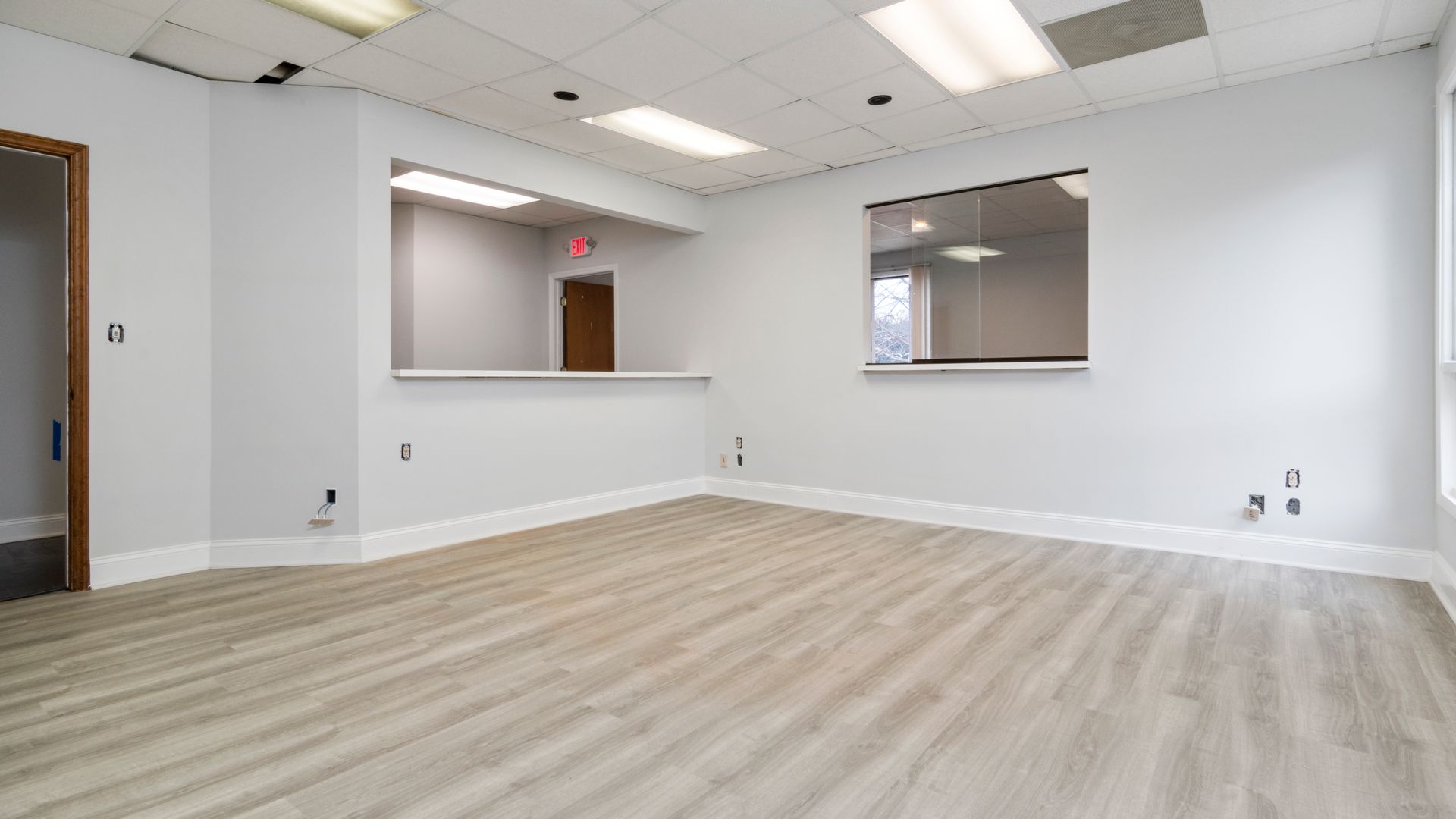
Marina covers hotel, office, retail and restaurant refurbishment, where the binding constraint is rarely build time. In Cyprus it is occupancy: rooms are full from April to October, so the programme decides the cost more than the rate does.
Published
Commercial refurbishment in Cyprus is worth doing when the building is losing income faster than the works will cost, and the honest test is arithmetic rather than appearance. Interior refurbishment runs €420 to €1,150 per m² depending on specification and access, with the middle of the market nearer €680, and a Category B office fit-out including services sits a little lower at €350 to €950 per m². The questions below are the ones that decide where inside those ranges a particular building lands.
The ten questions that come up most
- What does commercial refurbishment actually cost per square metre?
- Can the building keep trading while the work runs?
- How long does a fit-out take from order to handover?
- Does the work need a permit?
- Is the contractor allowed to do work of this value?
- Why are three quotes for the same building so far apart?
- What is a provisional sum, and how much of a quote should be one?
- When in the year is capacity cheapest?
- Is phasing better than closing?
- What happens to the price when the scope changes halfway through?
Short answers
Cost per square metre. The range is wide because it covers everything from a repaint-and-recarpet to a stripped shell with new services. Access, out-of-hours working and the services scope then move a project within it.
| Work | Indicative range | Midpoint | Published sources |
|---|---|---|---|
| Commercial renovationRefurbishment of existing premises in Cyprus, per m² of floor area, covering labour and materials for the fit-out trades. The low end is surface-level work: repainting, replacing floor coverings, new light fittings and fixture swaps. The median is the entry point of a full-scale overhaul; the high end is that overhaul complete with structural alterations, new electrical wiring and new glazing. Excludes the shell and structure, professional fees (Cyprus guides put architectural and engineering consultancy at 5–10 % of construction cost), permit and inspection charges (€200–500), and a customary 10–15 % contingency. The published Cyprus renovation bands are written for residential and mixed property; no Cyprus source publishes a separate commercial-only rate. VAT treatment is not stated by any of the sources. | €300–€1,200per m² | €700 |
|
Indicative range compiled from published sources, not a quote. It shows the level those sources report for this kind of work, not what your job costs. Only a site visit and a written quote for your actual scope produce a real figure. Sources compiled 2026-08-02.
Trading through the works. Usually possible, rarely free. Working around occupation buys the same labour at a premium, loses time to daily set-up and clear-down, and adds protection, separation and supervision a closed site does not need. That premium should be quantified before it is accepted.
Programme length. Driven by long-lead items and approvals rather than by trades on site. Switchgear, lifts, joinery, shopfront glazing and mechanical plant are ordered weeks before anyone benefits from them. A programme that starts at demolition and ignores procurement is a wish, not a plan.
Permits. Any change to layout, external envelope, structure or use triggers an approval route through the Department of Town Planning and Housing. Certified drawings are prepared by a professional registered with ETEK, and the application sits with the owner, not the contractor. Internal works that change none of those things generally do not, but that determination should be made by the person signing the drawings.
Contractor eligibility. Registration is granted by category and by class, and the class caps the value of works that may lawfully be undertaken. A contractor correctly registered for a small refit is not automatically eligible for a project an order of magnitude larger. This is checkable before a contract is signed and awkward to fix afterwards.
Why quotes diverge. Because each contractor priced a different job. The gap is normally assumptions about access, out-of-hours working, builder's work in connection with services, and what "make good" covers — not margin.
Provisional sums. Money set aside for work that cannot yet be priced, such as drainage found under a slab or the state of a substrate behind a wall. A quote with a few named provisional sums is honest. A quote with none, on an old building, has hidden them.
Cheapest capacity. Not the same as the cheapest time to build. Seasonal accommodation compresses its programme into November to March, which is when commercial clients compete hardest for the same contractors. Committing early buys both rate and availability.
Phasing versus closing. Phasing is justified when trading income through the works genuinely exceeds the remobilisation, protection and restricted-hours premium it creates. That is a calculation, and it frequently comes out against phasing on small floor plates.
Mid-project changes. A variation priced after the contractor is on site is priced without competition. Changes are cheapest before the order and most expensive after ceilings are closed.
Where the answer depends
Three things move the answer more than anything else, and none of them are visible on a floor plan.
The first is the route into the building. A ground-floor unit with its own shutter and a kerbside loading position is a different job from the same area on a fourteenth floor served by one residential lift on a booking system. In the second case the lift car dimension, not the loading bay, sets the maximum material size, and every skip of waste leaves the way it came in. That converts material cost into labour cost, and labour is the line that separates quotes.
The second is the age and type of the stock. Nicosia's 1970s to 1990s block inventory — Strovolos in particular — is dominated by rewiring and replumbing work, because the distribution boards, circuits and pipe runs behind the finishes are at the end of their service lives. A refurbishment of that stock which prices only what is visible will meet the rest as a variation. Newer commercial floors have the opposite problem: the services are fine, and the cost sits in the controls, the ceiling void and the fire compartmentation that partition changes disturb.
The third is the calendar. Screeds, renders and external coatings applied through July and August cure faster than the specification assumes unless the programme allows early starts and protection, and afternoon productivity falls in a way a day rate quoted in February did not allow for. Supplier lead times stretch around the August shutdown, and the coastal resorts have already booked the winter weeks.
What nobody asks but should
What does the lease require at the end of it? Reinstatement obligations turn a fit-out decision into a future liability. Bonding a floor finish or cutting into a structural slab may be cheap now and expensive at lease expiry, and that cost belongs in the appraisal that justified the works.
What is behind the ceiling in a pre-2000 building? Older Cypriot commercial stock can contain asbestos cement materials in soffits, flues, roof sheeting and service ducts. A survey before demolition costs a fraction of what stopping work mid-strip costs.
Is the incoming electrical supply large enough? New kitchen equipment, comfort cooling and higher lighting loads can exceed the existing capacity. A supply upgrade involves the utility and carries a lead time no amount of site labour compresses. This is the single most common cause of a fit-out finishing late in an otherwise well-run project.
Who is insured for what, and from when? Contract works insurance, existing structure cover and public liability need to be settled before possession of the site changes hands, particularly where the rest of the building is trading.
What documentation arrives at handover? Electrical test certificates, commissioning records, fire alarm certification, as-built drawings and warranties. These are worth more at a sale, valuation or insurance renewal than any finish in the building, and they are far harder to obtain once the final payment has been made.
Contractors documenting completed commercial projects are listed by district in the sector and coverage sections of this site.
Common questions
Is commercial refurbishment worth it if the building is tenanted?
It depends on what the works unlock. Refurbishment that supports a rent review, a lease renewal or a change of use has a measurable return. Refurbishment done because the interior looks tired, with no lease event attached to it, is an expense rather than an investment. The appraisal should name the event it is buying.
How many quotes are useful?
Three, priced against the same drawn scope. A fourth quote against a vague scope adds noise rather than information. Where three quotes are far apart, the scope is usually the problem rather than the market.
Should the works be priced inclusive or exclusive of VAT?
Whichever basis is chosen, all quotes should be on it. Two quotes stated on different bases will not reconcile, and the difference is large enough to reverse the ranking. Which rate applies to a given set of works is a matter for the Tax Department and the project's advisers, and it is worth settling before the appraisal is signed off rather than after.
Can a designer and a contractor be the same firm?
They can. A single point of responsibility removes the gap between design and construction, but it also removes the independent check on what is being specified and at what price. Where the budget justifies it, a separate professional preparing the scope usually pays for itself in the quality of the tender.
What is the most reliable way to shorten a programme?
Order early. Procurement, not labour, sets the finish date on most commercial refurbishments. Adding operatives to a site waiting for switchgear changes nothing; placing that order sooner moves the handover date directly.
Contractors documenting commercial projects
8 companies shown here.
SB Pazzleco
Strovolos, Nicosia
SB Pazzleco is a construction company in Strovolos, in the Nicosia district.
- General building
- Home renovation
- Commercial renovation
- House extension
- +2 more
C Roushas & Co.
Nicosia Centre, Nicosia
C Roushas & Co. is a construction company in Nicosia Centre, in the Nicosia district.
- General building
- Home renovation
- Commercial renovation
- House extension
- +2 more
Mo.Sa Constructions Ltd.
Larnaca Centre, Larnaca
Mo.Sa Constructions Ltd. is a construction company in Larnaca Centre, in the Larnaca district.
- General building
- Home renovation
- Commercial renovation
- House extension
- +2 more
Tofalli Construction & Developer
Larnaca Centre, Larnaca
Tofalli Construction & Developer is a construction company in Larnaca Centre, in the Larnaca district.
- General building
- Home renovation
- Commercial renovation
- House extension
- +2 more
ΛΟΪΖΟΥ ΛΟΪΖΟΣ
Livadia, Larnaca
ΛΟΪΖΟΥ ΛΟΪΖΟΣ is a construction company in Livadia, in the Larnaca district.
- General building
- Home renovation
- Commercial renovation
- House extension
- +2 more
AN.O. Constructions Ltd.
Mesa Geitonia, Limassol
AN.O. Constructions Ltd. is a construction company in Mesa Geitonia, in the Limassol district.
- General building
- Home renovation
- Commercial renovation
- House extension
- +2 more
Build Better Future
Germasogeia, Limassol
Build Better Future is a construction company in Germasogeia, in the Limassol district.
- General building
- Home renovation
- Commercial renovation
- House extension
- +2 more
M.T. Metal Frame Houses Ltd
Nicosia Centre, Nicosia
M.T. Metal Frame Houses Ltd is a construction company in Nicosia Centre, in the Nicosia district.
- General building
- Home renovation
- Commercial renovation
- House extension
- +2 more
Sources
- Cyprus Statistical Service — construction cost indices — retrieved 2026-07-28
- Cyprus Scientific and Technical Chamber (ETEK) — retrieved 2026-07-28
- Department of Town Planning and Housing — planning and building permits — retrieved 2026-07-28
- Tax Department — VAT on construction works — retrieved 2026-07-28
01More on this topic
Same cluster.Different question.
 8 min read
Commercial Renovation: Comparing the Options for Cyprus
Five commercial renovation options for Cyprus compared on recorded per square metre ranges, on closure time, and on cost across a ten-year hold.
 7 min read
What Commercial Renovation Actually Involves in Cyprus
What a commercial renovation in Cyprus covers as standard, what is priced separately, and the items that move a programme far more than they move a budget.
Where to go next
Companies, districts and the rest of the guides on this subject.
Thinking of doing this?Get up to five quotes, free.
Tell us about the property and we will gather quotes from contractors who plan around the season.