Commercial renovation
What commercial renovation actually involves in Cyprus
What a commercial renovation in Cyprus covers as standard, what is priced separately, and the items that move a programme far more than they move a budget.
7 min read
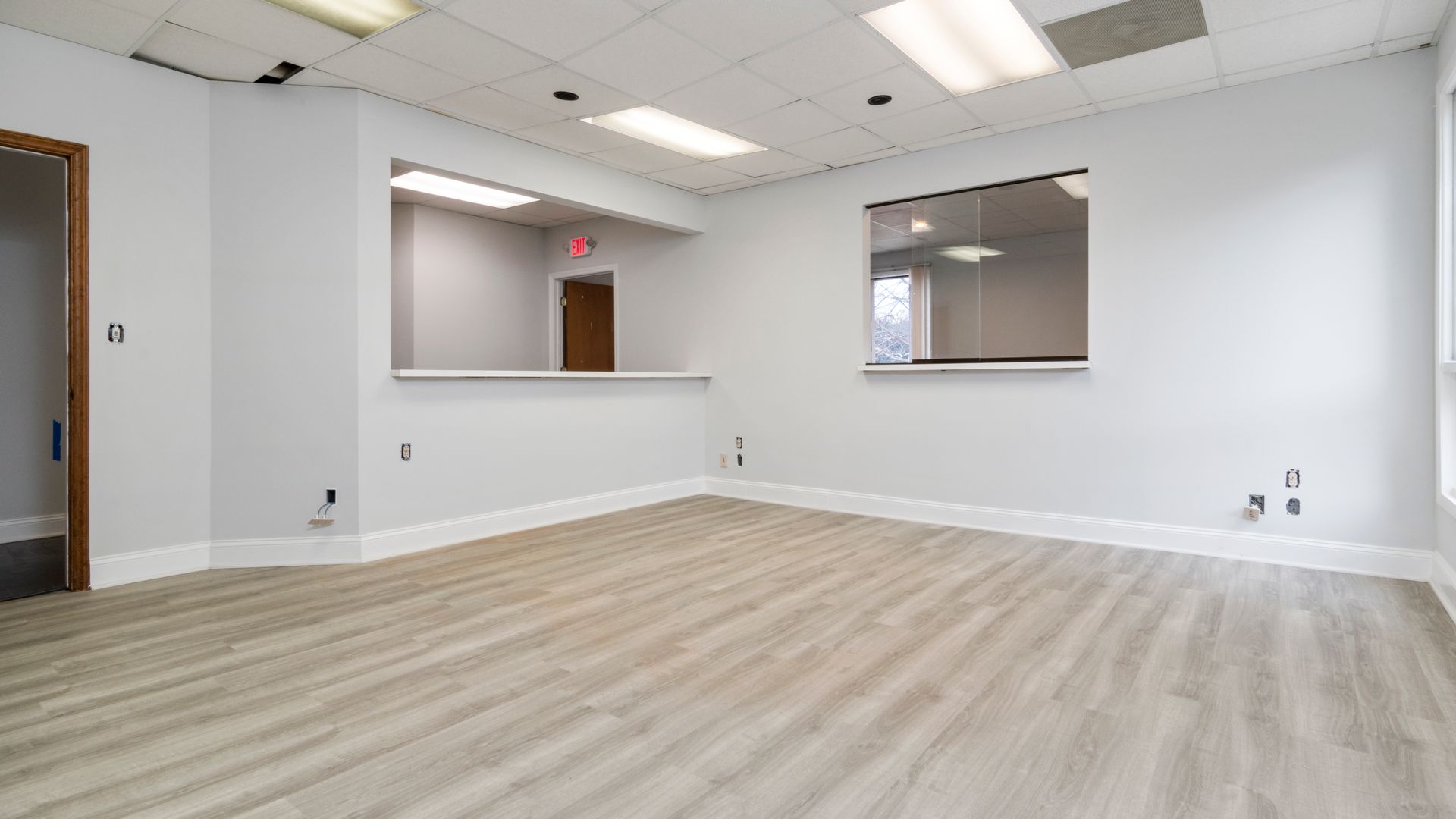
Marina covers hotel, office, retail and restaurant refurbishment, where the binding constraint is rarely build time. In Cyprus it is occupancy: rooms are full from April to October, so the programme decides the cost more than the rate does.
Published
A commercial renovation in Cyprus is four workstreams and an approval chain: strip out what is going, repair or alter the fabric, replace the services, then finish and commission. Taken from shell to occupied, that work is published at €420 to €1,150 per square metre nationally, with a median of €680. The construction is rarely what decides whether the project succeeds. The closure window, the approvals and the condition of what is found behind the plasterboard are.
| Work | Indicative range | Midpoint | Published sources |
|---|---|---|---|
| Commercial renovationRefurbishment of existing premises in Cyprus, per m² of floor area, covering labour and materials for the fit-out trades. The low end is surface-level work: repainting, replacing floor coverings, new light fittings and fixture swaps. The median is the entry point of a full-scale overhaul; the high end is that overhaul complete with structural alterations, new electrical wiring and new glazing. Excludes the shell and structure, professional fees (Cyprus guides put architectural and engineering consultancy at 5–10 % of construction cost), permit and inspection charges (€200–500), and a customary 10–15 % contingency. The published Cyprus renovation bands are written for residential and mixed property; no Cyprus source publishes a separate commercial-only rate. VAT treatment is not stated by any of the sources. | €300–€1,200per m² | €700 |
|
Indicative range compiled from published sources, not a quote. It shows the level those sources report for this kind of work, not what your job costs. Only a site visit and a written quote for your actual scope produce a real figure. Sources compiled 2026-08-02.
Those figures are read from the price index at page load, with their derivation and date attached, rather than fixed into this text.
Scope in plain terms
Strip-out comes first, and it is also the survey. Ceilings down, services exposed, floor finishes lifted — this is where the project learns what it is dealing with, which is why any budget agreed before it is provisional regardless of its label.
Fabric work follows: partitions moved or built, openings formed, floors levelled, waterproofing and render repaired. On a concrete-framed Cypriot building the frame is usually sound and the problems sit at the edges — balcony upstands, roof falls, parapet details, window reveals.
Services are the largest single share on most jobs and the part that most often determines the programme. On the 1970s to 1990s stock that dominates districts like Strovolos, the distribution board and the pipework are frequently at the end of their life, so a renovation conceived as a cosmetic exercise turns into rewiring and replumbing.
Finishes and commissioning close it out. Commissioning is a distinct activity, not a synonym for finishing: ventilation balanced, cooling proved under load, fire systems tested and certified. A building that has been installed and not commissioned looks identical to one that has been.
The sector pages break this down by building type, because the mix shifts hard. Category B office fit-out including services is published at €350 to €950 per square metre, median €560; retail at €450 to €1,300, median €720; restaurants at €700 to €2,100, median €1,150, with the difference concentrated in a few metres of kitchen extraction and grease management. Common areas in a block sit lowest at €180 to €560, median €310, and facade work is measured on a different basis again, €55 to €175 per square metre of elevation, median €95.
What is included as standard
A contractor pricing a commercial renovation on a defined scope will normally include, without being asked:
- Strip-out and disposal of identified redundant material, removed from site.
- Partitions, doors and general builder's work as drawn, including making good around them.
- Electrical installation and containment to the specified points, and final connection of the equipment listed.
- Cooling and ventilation to the specified zones, with ductwork, diffusers and controls.
- Water and drainage alterations within the demise, to the fittings shown.
- Fire detection, alarm and emergency lighting to the layout provided.
- Wall, floor and ceiling finishes as scheduled, and decoration.
- Site management, welfare and temporary protection for the duration.
- Commissioning and handover records — the document set that lets a building be occupied rather than merely finished.
- The defects period stated in the contract.
Everything in that list is priced against a drawing or a schedule. Where the drawing does not exist, the item is not included — it is assumed, and the assumption belongs to whoever signed.
What is almost always extra
- Planning permission and the building permit. Structural work and most envelope changes require a building permit, issued on drawings certified by a registered engineer. Where the local plan, zoning or density is engaged, planning permission comes first and is determined before the permit is assessed. These are the owner's appointments and the owner's programme risk.
- Professional fees — engineer, architect, quantity surveyor, fire consultant. Certification by an ETEK-registered professional is a condition of the permit chain, not an optional layer of comfort.
- Asbestos survey and licensed removal on stock of a certain age. It stays provisional until the survey returns, and it can stop a programme dead.
- Structural repair found on opening up — corroded reinforcement in a balcony edge, a slab that will not take the new loading.
- Incoming supply upgrades. A larger electrical supply, a new meter position or a drainage connection outside the demise sit with the utility's timetable, not the contractor's.
- Furniture, loose equipment, IT and audiovisual, and in hospitality the operating supplies — frequently confused with the fit-out because they arrive in the same week.
- Kitchen equipment in a restaurant. The extraction and grease management are usually in the building contract; the equipment behind them usually is not.
- Photovoltaic and energy measures, priced on a different unit entirely.
- Out-of-hours and phased working where the building keeps trading.
- VAT, at the rate applicable to the property and its use, stated on the quote rather than assumed from a previous project.
The parts people underestimate
The closure window, not the build. In the Famagusta district — Paralimni, Ayia Napa, Protaras — the stock is predominantly seasonal, so refurbishment concentrates into November to March. That is not a preference; it is the only period in which rooms are empty, and it bounds the programme at both ends with dates nobody controls. The recorded median there is the lowest on the island at €626 per square metre, range €386 to €1,058, and it buys nothing if the work cannot finish before the season opens. Contractor availability inside that window is the scarce resource, and it is booked far earlier than owners expect.
Approvals running in parallel with nothing. The permit chain is a serial process with an owner-side dependency at every step. A project that starts drawing in January for a November closure is not early; it is on time.
Access. On hillside plots in areas such as Peyia, steep approach roads limit crane and delivery vehicle size, which changes how materials arrive and how plant is lifted. In central Limassol the constraint is restricted street frontage, permits for hoardings and lifting, and neighbours with their own trading hours.
The building's own age. Rewiring and replumbing on 1970s to 1990s stock is the commonest source of a scope that doubles. Handle it as a provisional sum with an agreed rate attached, opened after strip-out.
Deferred facade and waterproofing work. Rapid high-rise development in Limassol has left a large maintenance load in balcony waterproofing and facade repair, published at €55 to €175 per square metre of elevation, median €95. Deferring it during an interior renovation means opening the same building twice.
Commissioning and evidence. The gap between "installed" and "commissioned and certified" is where handover dates are lost. Tie the final payment stages to commissioning records rather than to visual completion.
Common questions
Is a commercial renovation worth doing rather than relocating?
It depends on what the structure and services allow and on what the lease permits. Renovation is the stronger case where the frame and envelope are sound and the failure is in services and layout, because the expensive elements are retained. It weakens where floor-to-ceiling height cannot take the services a modern use needs, where the incoming supply is inadequate and the utility upgrade is slow, or where the permit chain for a change of use outlasts the remaining lease.
How long does a commercial renovation take?
The construction is the shorter half. Approvals dominate: for a building permit where one is required, and for planning permission before it. Design, tender and procurement sit ahead of both, and long-lead plant and joinery sit inside the build. Working back from a required opening date is the only useful way to plan it.
Can the business keep trading through the works?
Frequently yes, in phases, with separated access, temporary protection and out-of-hours working for the noisiest operations. It costs more and takes longer than a closed-building programme, and both effects should appear in the quote. In hospitality the alternative is usually not phasing but the off-season window, which is why refurbishment in the Famagusta district clusters into November to March.
Why do quotes for the same building differ so widely?
Because they are rarely pricing the same job — different assumptions about strip-out extent, about whether rewiring is included or provisional, about out-of-hours working, about who holds the professional fees. Issuing one written scope and asking every contractor to price that is what makes the numbers comparable.
What should be surveyed before committing to a budget?
Structure and any visible movement, electrical distribution and incoming supply capacity, drainage, roof and balcony waterproofing, and asbestos where the age of the building indicates it. Each can move a budget by more than any finish specification, and all are cheaper to investigate than to discover.
Where do the district figures come from?
From published cost sources, held per district and per scope, with the basis and the date attached. Limassol is the highest at a median of €762 per square metre, range €470 to €1,288; the Famagusta district the lowest at €626, range €386 to €1,058. The difference is contractor demand rather than material cost, and it sits on the district coverage pages alongside the contractors recorded as working in each one.
Commercial renovation contractors
8 companies shown here.
SB Pazzleco
Strovolos, Nicosia
SB Pazzleco is a construction company in Strovolos, in the Nicosia district.
- General building
- Home renovation
- Commercial renovation
- House extension
- +2 more
C Roushas & Co.
Nicosia Centre, Nicosia
C Roushas & Co. is a construction company in Nicosia Centre, in the Nicosia district.
- General building
- Home renovation
- Commercial renovation
- House extension
- +2 more
Mo.Sa Constructions Ltd.
Larnaca Centre, Larnaca
Mo.Sa Constructions Ltd. is a construction company in Larnaca Centre, in the Larnaca district.
- General building
- Home renovation
- Commercial renovation
- House extension
- +2 more
Tofalli Construction & Developer
Larnaca Centre, Larnaca
Tofalli Construction & Developer is a construction company in Larnaca Centre, in the Larnaca district.
- General building
- Home renovation
- Commercial renovation
- House extension
- +2 more
ΛΟΪΖΟΥ ΛΟΪΖΟΣ
Livadia, Larnaca
ΛΟΪΖΟΥ ΛΟΪΖΟΣ is a construction company in Livadia, in the Larnaca district.
- General building
- Home renovation
- Commercial renovation
- House extension
- +2 more
AN.O. Constructions Ltd.
Mesa Geitonia, Limassol
AN.O. Constructions Ltd. is a construction company in Mesa Geitonia, in the Limassol district.
- General building
- Home renovation
- Commercial renovation
- House extension
- +2 more
Build Better Future
Germasogeia, Limassol
Build Better Future is a construction company in Germasogeia, in the Limassol district.
- General building
- Home renovation
- Commercial renovation
- House extension
- +2 more
M.T. Metal Frame Houses Ltd
Nicosia Centre, Nicosia
M.T. Metal Frame Houses Ltd is a construction company in Nicosia Centre, in the Nicosia district.
- General building
- Home renovation
- Commercial renovation
- House extension
- +2 more
Sources
- Department of Town Planning and Housing — retrieved 2026-07-24
- ETEK — Cyprus Scientific and Technical Chamber — retrieved 2026-07-24
- Cyprus Statistical Service — construction cost indices — retrieved 2026-07-24
- Tax Department — VAT — retrieved 2026-07-24
01More on this topic
Same cluster.Different question.
 8 min read
Commercial Renovation: Comparing the Options for Cyprus
Five commercial renovation options for Cyprus compared on recorded per square metre ranges, on closure time, and on cost across a ten-year hold.
 7 min read
Commercial Renovation in Cyprus: Common Questions
Budget guidance for commercial renovation in Cyprus: the published cost level, what phasing does to it, and what a tender should cover.
Where to go next
Companies, districts and the rest of the guides on this subject.
Thinking of doing this?Get up to five quotes, free.
Tell us about the property and we will gather quotes from contractors who plan around the season.