Commercial renovation
Room Release Criteria After Commercial Refurbishment
Set practical room release criteria covering shared services, commissioning, defects and operating boundaries after refurbishment.
6 min read
Renovated.cy Editorial publishes practical guides to commercial refurbishment, phased delivery and project administration. Its comparisons explain the business requirements, source information and reasoning behind each recommendation.
Published · Updated
Define the decision that releases the room
A room is ready to return to use when the evidence supports its intended operation within the surrounding building. Decorating completion is only one input. A hotel bedroom may look finished while its corridor remains a delivery route, its cooling controls remain untested or another phase still depends on opening its service access. Release criteria should describe those dependencies before the promised reopening date.
Start by naming the intended use and the decision owner. Releasing a bedroom for overnight guests differs from allowing maintenance staff to enter it for checks. Record the permitted use, room identifiers, supporting evidence and any restrictions. Avoid a single status called complete that means different things to construction, housekeeping and reservations.
The existing hotel room block planning guide addresses sequencing and already includes a handover section. This article develops that overlapping handover issue into an evidence based release decision.
Draw a boundary that operations can maintain
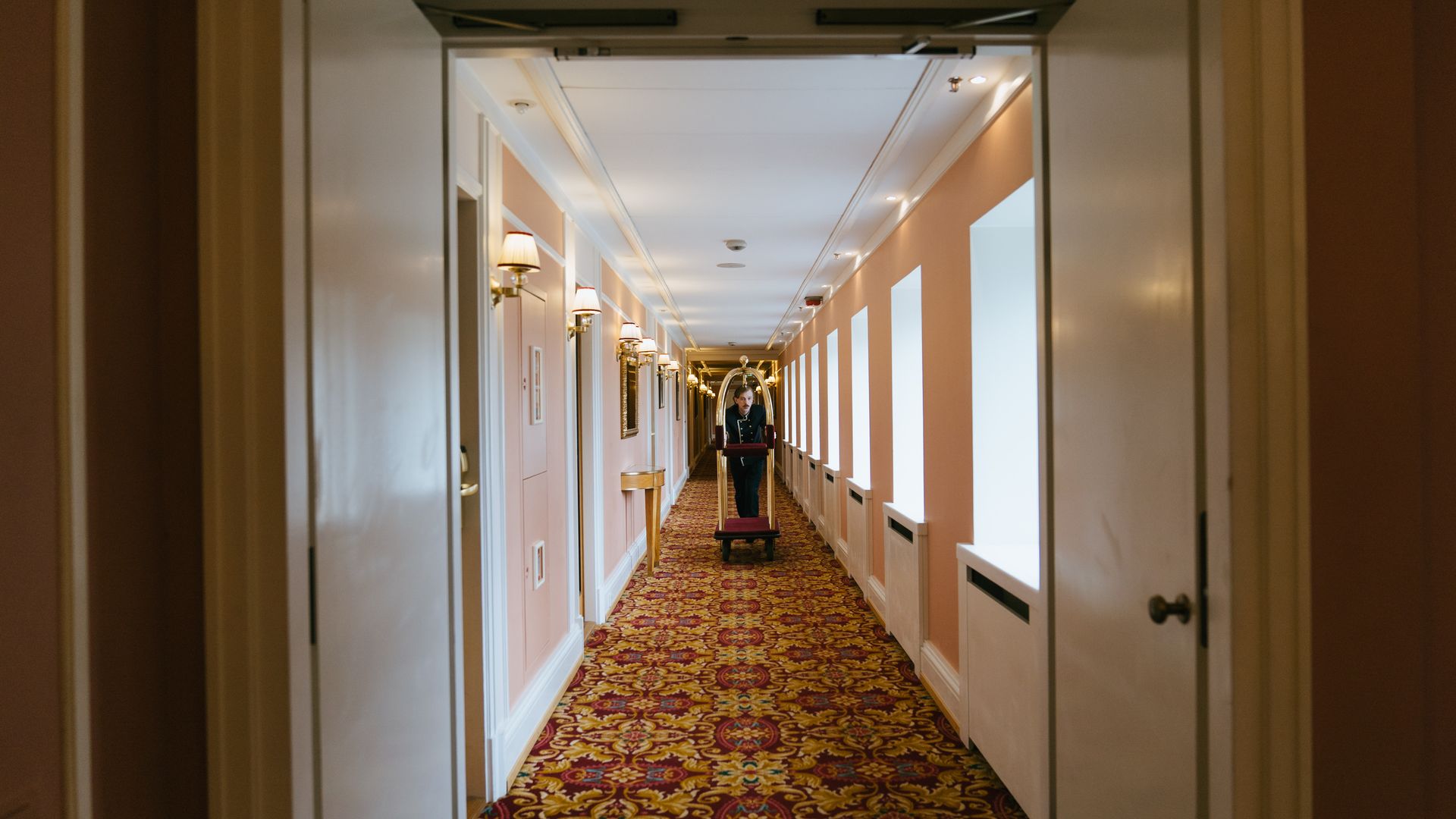
Mark the proposed released area on a plan, including its access route and the services it shares with unfinished work. Walk that boundary with the contractor and the operator. A separation line that works on a drawing can fail when housekeeping needs a trolley route or construction workers need the same stair to remove waste.
UK HSE guidance says work in occupied buildings should not interfere with escape routes, fire separation, alarms, dry risers or sprinklers. These are useful technical prompts for the boundary review, not statements of Cyprus law. HSE general fire safety guidance
Turn each identified interface into a condition that can be maintained. If a corridor is required for guests, define how subsequent deliveries avoid it. If an isolation affects released rooms, name the notification and rechecking arrangements. A boundary dependent on everyone remembering an informal agreement is difficult to operate consistently.
Write acceptance conditions that produce evidence
Replace vague requirements such as services working with specific demonstrations linked to the installed scope. For a room with new cooling controls, the agreed record might show that the specified operating modes were demonstrated and that maintenance received the correct instructions. For altered plumbing, the responsible specialist should define the applicable inspection and test records.
Set numerical criteria only where the project specification, equipment documentation or competent specialist establishes them. Inventing a universal temperature, drying period or ventilation duration would create false precision. Identify the test method, instrument where relevant, test conditions and person responsible for interpreting the result.
A useful release sheet connects each condition to evidence rather than copying an entire construction specification. It should make three outcomes easy to distinguish: demonstrated compliance with the agreed requirement, a recorded defect with an accepted operational restriction, or insufficient evidence to decide. The third outcome calls for a defined next check.
Separate permissions from the handover decision
Cyprus government building permission guidance identifies construction, demolition, extensions, alterations or conversions, repairs and changes of use within its described permission framework. It identifies the relevant District Local Government Organisation as the building permit authority and describes electronic submission through IPPODAMOS by the owner through an authorised project designer. Cyprus building permission guidance
The project designer should establish which requirements apply to the actual refurbishment. Record any permission condition that affects use of the completed area in the release file. A contractor's handover form cannot replace an authority decision where one is required, and a building permission does not itself demonstrate that every installed item functions correctly.
Keep this administrative evidence proportionate to the work. The operator needs a clear statement of applicable outstanding conditions, rather than a folder of unrelated approvals. If the scope changed during construction, ask the responsible designer whether that change affects the existing permission position before relying on the earlier assessment.
Classify defects by their operational consequence
A snag count is a poor release measure. One unresolved access or service problem can matter more than twenty paint blemishes. Classify each defect by what it prevents: safe intended use, reliable operation, cleaning and maintenance, or appearance. The responsible specialist should determine the significance of technical defects within their competence.
An appearance defect may be compatible with release if the operator accepts its effect and correction can occur without disrupting occupants. A defect requiring noisy drilling beside an occupied bed has a different consequence from an equivalent blemish corrected in a closed storeroom. Include the repair method and access requirement when making the decision.
Do not use conditional release to disguise missing evidence. A known minor defect with a named correction date is different from an untested system described as probably satisfactory. Where uncertainty concerns a critical function, identify the check needed to resolve it and retain the relevant restriction until that evidence exists.
A hypothetical release meeting for eight rooms
Imagine an eight room hotel phase, with all figures and circumstances invented for illustration. Six rooms have completed their agreed inspections, operational demonstrations and housekeeping preparation. One has an unresolved shower leak. The eighth has no room defect, but reaching it requires passage through an active work zone.
The release meeting does not report seven usable rooms merely because only one room contains a visible defect. It considers six for release, retains the leaking room pending repair and retest, and holds the access dependent room until its route can meet the agreed conditions. The contractor owns the repair action; the relevant specialist defines the verification; operations controls the inventory status.
Suppose the next phase then requires an interruption to the shared water supply. The six released rooms remain subject to that dependency. The operator must assess the interruption before accepting bookings affected by it. Release is a documented operating condition that can change, rather than a permanent label attached to a room.
Investigate ambiguous observations proportionately
A smell, noise or mark should lead to a recorded observation and a focused investigation. Describe its location, timing and operating conditions. A persistent odour could have several explanations; a photograph alone cannot establish its source. Ask the relevant trade or specialist to investigate the plausible system involved before commissioning unrelated testing.
Cleaning confirms a different set of conditions from technical commissioning. Housekeeping can identify residue, damage, missing equipment and practical access problems, but its acceptance should not be represented as certification of electrical or mechanical work. Sequence final preparation after intrusive checks wherever practicable.
Where a test result is inconclusive, record what it does establish and what remains unresolved. The next action should answer that uncertainty directly: repeat a demonstration under representative conditions, inspect a concealed interface where justified, or obtain the missing commissioning record. Repeating a general walkthrough may add little evidence.
Hand control to the people who will operate the space
Complete release with an operational handover that maintenance and front line staff can use. Provide room identifiers, equipment instructions, isolation information, remaining defects and contact responsibilities. Confirm who updates the booking or occupancy system and who can withdraw a room if a release condition stops being met.
HSE's construction fire guidance specifically recognises phased handover as requiring consideration of people affected in both construction and occupied premises. That reinforces the need to review the next phase as well as the finished rooms. Its UK guidance does not establish a Cyprus reopening approval. HSE Fire Safety in Construction
Use the hotel refurbishment service scope to prepare an enquiry that includes these release deliverables. Ask the proposed team to price and programme the inspections, demonstrations and handover work explicitly, so operational readiness has an owner before construction reaches its final week.
Frequently asked questions
Can rooms reopen with outstanding cosmetic snags?
Potentially, if their consequence and correction method are understood and accepted by the operator. Technical uncertainty or an unsafe access dependency should not be classified as a cosmetic snag.
Who should authorise room release?
Name an operational decision owner and define the supporting responsibilities of the contractor, project designer and relevant specialists. Operations should rely on evidence within each contributor's competence.
Is a clean room sufficient evidence for reopening?
No. Cleaning readiness is separate from service commissioning, access, shared system dependencies and applicable permission conditions.
When should a released room be reassessed?
When a release condition changes, such as a shared service interruption, altered access, intrusive defect correction or a new fault affecting intended use.
Prepare a commercial refurbishment scope with explicit room release evidence and responsibilities.
Sources
- HSE — General fire safety in construction — retrieved 2026-10-15
- Cyprus Government — Building Permission — retrieved 2026-10-15
- HSE — Fire Safety in Construction, HSG168 — retrieved 2026-10-15
01More on this topic
Same cluster.Different question.
 6 min read
Base Build and Tenant Fit-Out: Define the Handover Boundary
Define service interfaces, occupied-area controls and measurable acceptance criteria between base-build and tenant fit-out teams in Cyprus.
- 6 min read
Buying Spare Finish Materials for Hospitality Refurbishment
Specify usable spare finishes for hotel refurbishment, compare reserve-stock offers and protect phased handovers without guessing a percentage.
- 6 min read
Defining Out-of-Hours Site Supervision Allowances
Define overnight supervision coverage, change triggers and morning handover criteria for commercial refurbishment while premises remain operational.
- 5 min read
Noise monitoring beside occupied guest rooms
Plan hotel refurbishment noise monitoring around occupied rooms, agreed measurement settings, work logs and clear pause or escalation responsibilities.
Where to go next
Companies, districts and the rest of the guides on this subject.
Thinking of doing this?Get up to five quotes, free.
Tell us about the property and we will gather quotes from contractors who plan around the season.