Apartment block renovation
Apartment block renovation in Cyprus, question by question
Apartment block renovation in Cyprus, question by question: who decides, how the cost is apportioned, and what the committee must agree first.
7 min read
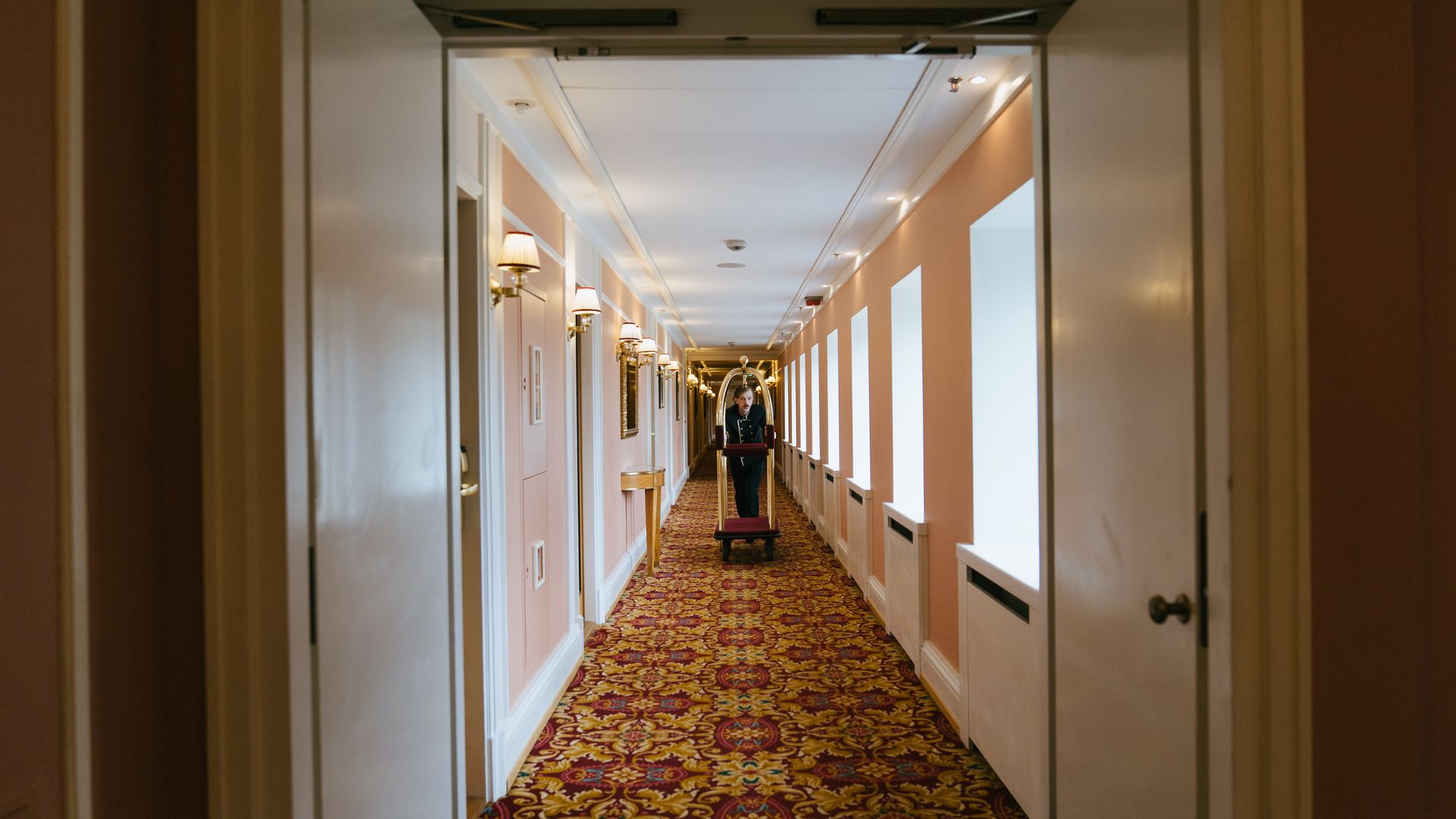
Marina covers hotel, office, retail and restaurant refurbishment, where the binding constraint is rarely build time. In Cyprus it is occupancy: rooms are full from April to October, so the programme decides the cost more than the rate does.
Published
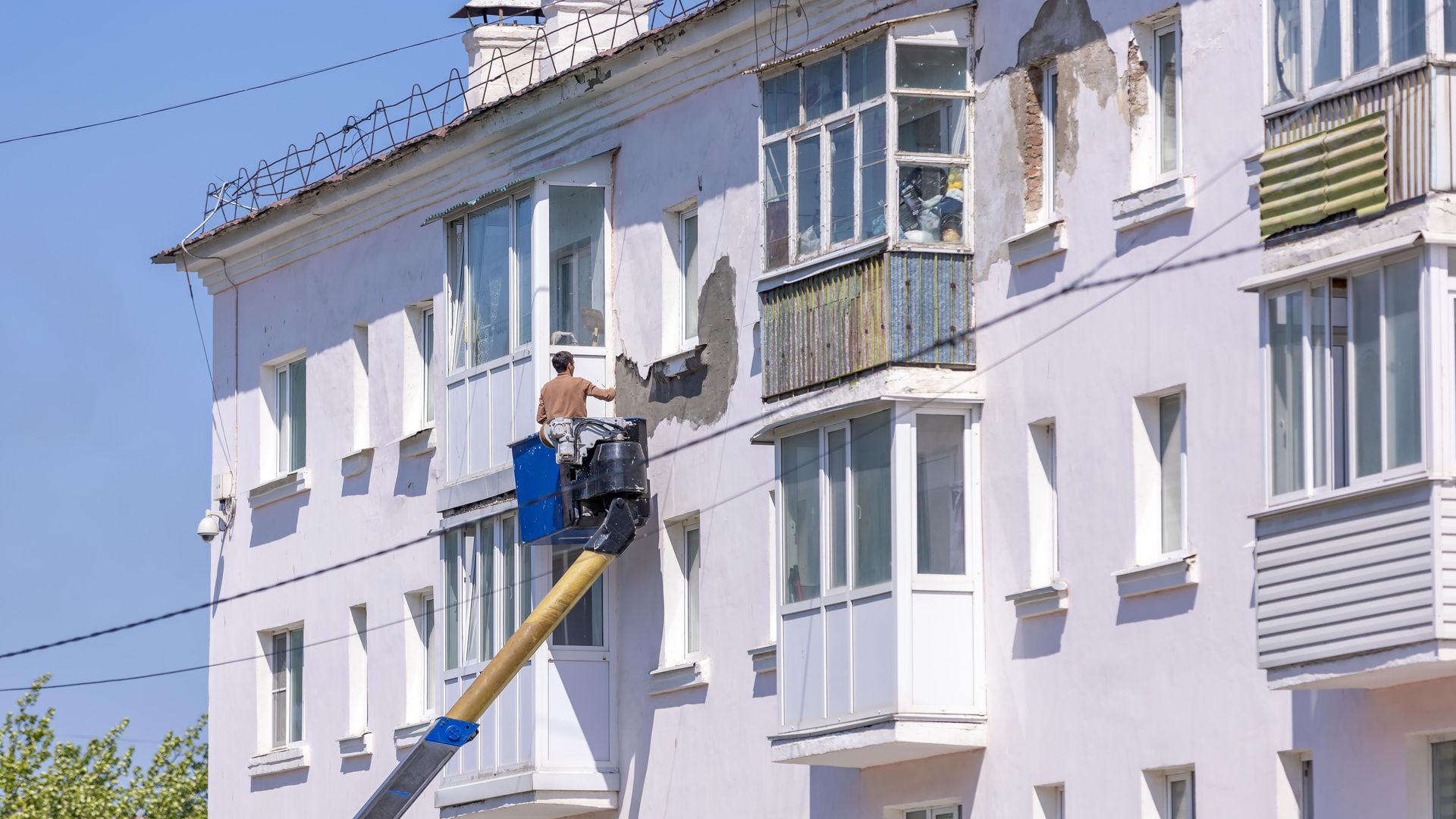
Whole-block renovation in Cyprus records €3,200 to €11,000 per apartment, median €5,800, covering the common parts and the envelope divided across the units — stairwells, lobby, roof, render, balcony edges, external lighting and the risers serving them. Nothing inside a flat is in that figure. Most of what a management committee actually asks is not about the building at all: who decides, who pays, what happens if a unit will not, and whether the work is worth doing. The answers below run in the order the questions arrive.
The ten questions we get most
- Who decides that a block is renovated?
- How is the cost split between owners?
- What happens when an owner will not or cannot pay?
- What does it cost, and per what?
- Do we need a permit?
- Can we live in the building while it happens?
- How long does it take?
- How do we know a contractor is allowed to do work this size?
- Is it worth it, or should we just patch?
- When should we start?
Short answers
Who decides. A jointly owned building is administered by a management committee constituted under the jointly owned buildings provisions, and decisions about the common parts are taken at a general meeting. The threshold differs depending on whether the work counts as repair and maintenance of the common parts or as an improvement to them. That distinction decides the majority required, and it is worth confirming with the district lands office before the meeting rather than after it.
How it is split. By share, and collected through the common expenses fund. Not by benefit, not by who complained, not by who uses the lift.
Non-payment. The fund is a debt owed to the building and the committee has a recovery route. What sinks projects is the timing rather than the route: a contract signed before the money is collected leaves the committee exposed. Collect first, or stage the contract to match collection.
Cost. Per apartment for setting a levy; per square metre for pricing a scope. A block does not buy apartments, it buys square metres of facade and common area, so the per-unit figure is only useful for dividing a total once it exists.
Permits. Like-for-like repair and redecoration of the common parts generally needs none. Anything that changes the envelope, the structure or the layout does — enclosing balconies, altering openings, adding a lift shaft, changing the roof line. Certified drawings require an ETEK-registered professional and the application is made in the owner's name, which on a jointly owned building means the committee. A contractor's offer to handle the permits leaves the exposure where it started.
Occupation. Yes, and it is the normal case. It adds protection, restricted hours, a separated route for materials and remobilisation between phases.
Duration. Set by the access system and the weather window, not by the number of flats. Scaffold up to scaffold down is the honest unit of programme.
Contractor class. Registration is granted by category and by class, and the class limits the value of works that may lawfully be undertaken. A facade contract across twenty units can exceed a class that was ample for the villa the contractor was recommended for. Read the class against the contract value.
Worth it. Depends entirely on what is failing. See below.
Timing. Earlier than feels necessary. Envelope contractors are generally committed months ahead, and the application windows are seasonal.
Where the answer depends
Three numbers do the real work, and a committee can assemble its own estimate from them before a contractor sees the building.
Facade renovation records €55 to €175 per m², median €95, for render repair, coating and balcony edge detail. The bottom of that band is a clean, fill and recoat; the top includes concrete repair to spalled balcony edges, and that single item moves a coastal quote more than any other. Common areas record €180 to €560 per m², median €310, for stairwells, lobby and lighting, and the spread is finishes plus whether the electrical installation is renewed rather than patched. Energy retrofit records €120 to €380 per m², median €210, when insulation, glazing and HVAC are taken as one package rather than three jobs.
Where the block stands changes which of those dominates. Blocks in Strovolos and the surrounding Nicosia suburbs are largely 1970s to 1990s stock, and there rewiring and replumbing dominate: risers at the end of their life, distribution boards that predate current practice, galvanised supply pipework that will not survive another decade. That is a services project with a facade attached. On the Limassol coast, rapid high-rise development has made balcony waterproofing and facade maintenance the recurring item instead, returning on a cycle rather than once. In Kato Paphos and other directly exposed positions the air is salt-laden, galvanised and marine-grade fixings are standard rather than an upgrade, and chloride-driven corrosion in balcony reinforcement is why the concrete repair allowance should be a measured quantity from a survey rather than a round number.
Access changes the rest. A five-storey block on a normal street takes a scaffold. A hillside block on a narrow approach may not accept a mobile crane at all, which decides how scaffold, render and plant arrive and how many deliveries the programme needs. That cost lands inside day rates rather than as a line item, so a contractor who has not visited cannot have priced it.
Then the calendar. Render, coatings and waterproofing have application windows set by surface temperature and humidity, and a west-facing elevation in July sits outside them for much of the working day. Add letting season on blocks with short-let units and envelope work compresses into the cooler months.
What nobody asks but should
What is actually failing, and how fast? A committee that renovates because the building looks tired spends the same money as one that renovates because the balcony edges are spalling, and gets a different asset back. Commission a condition survey before the general meeting and let it set the scope.
What is the cost of doing nothing for two more years? Concrete repair is the clearest case: exposed reinforcement corrodes at a rate, the lost section is not recovered, and next time the repair quantity is larger. Waterproofing failures work the same way through the slab below. Deferral is a decision with a price and should be quoted alongside the works.
Is the scaffold being used once or twice? The access system is a substantial share of an envelope contract and is paid for whether one trade or four use it. Roof edge work, balustrade replacement, external lighting, rainwater goods and any external insulation should be decided before the scaffold is designed.
Who supervises the contract? A committee signing a construction contract without a supervising professional carries the technical risk itself. Where drawings are certified an ETEK-registered engineer or architect is already involved, and extending that appointment to cover site supervision and valuation of work in place is usually the cheapest insurance in the project.
What does the quote exclude? Read the exclusions before the inclusions. Asbestos survey, structural survey, statutory approvals, temporary works and make-good of adjacent areas are the usual five.
Common questions
Can individual owners opt out of paying for the lift or the roof?
No. Common parts are common, and the apportionment follows the share recorded for each unit rather than the use any owner makes of it. Ground-floor owners regularly ask about the lift; the answer does not change.
Should energy work be done in the same contract as the facade?
Almost always, if it is going to be done at all. External insulation, glazing and shading interact with the envelope and with the access system already being paid for. Splitting them means a second scaffold and a second disruption.
How many quotes should a committee collect?
Three, priced against the same drawn scope and the same measured quantities. A fourth against a vague scope adds noise rather than information. When three quotes land far apart, the scope is the problem, not the market.
What should the committee check about a contractor?
Four things a document can prove: the company exists as a legal entity with a registration number and a standing; the registration covers the category and class the contract value requires; public and employer's liability insurance is in force across the programme dates; and there is delivery evidence from comparable blocks, with the date promised and the date achieved. Nothing here is a rating or a testimonial, and the sector and coverage pages record only what has been verified.
Contractors recorded for block renovation work
8 companies shown here.
Vegghera Management
Protaras, Famagusta
Vegghera Management is a property management in Protaras, in the Famagusta district.
Fox Properties
Strovolos, Nicosia
Fox Properties is a property management in Strovolos, in the Nicosia district.
D. Zavos Group
Limassol Centre, Limassol
D. Zavos Group is a property management in Limassol Centre, in the Limassol district.
Premier Property Management Ltd
Protaras, Famagusta
Premier Property Management Ltd is a property management in Protaras, in the Famagusta district.
ElloCyprus
Paralimni, Famagusta
ElloCyprus is a property management in Paralimni, in the Famagusta district.
Superstay Rentals
Paralimni, Famagusta
Superstay Rentals is a property management in Paralimni, in the Famagusta district.
ElloCyprus
Paralimni, Famagusta
ElloCyprus is a property management in Paralimni, in the Famagusta district.
Epinal
Strovolos, Nicosia
Epinal is a property management in Strovolos, in the Nicosia district.
Sources
- Department of Lands and Surveys — jointly owned buildings — retrieved 2026-07-27
- Department of Town Planning and Housing — retrieved 2026-07-27
- Cyprus Statistical Service — construction cost indices — retrieved 2026-07-27
- Cyprus Scientific and Technical Chamber (ETEK) — retrieved 2026-07-27

Where to go next
Companies, districts and the rest of the guides on this subject.
Thinking of doing this?Get up to five quotes, free.
Tell us about the property and we will gather quotes from contractors who plan around the season.